

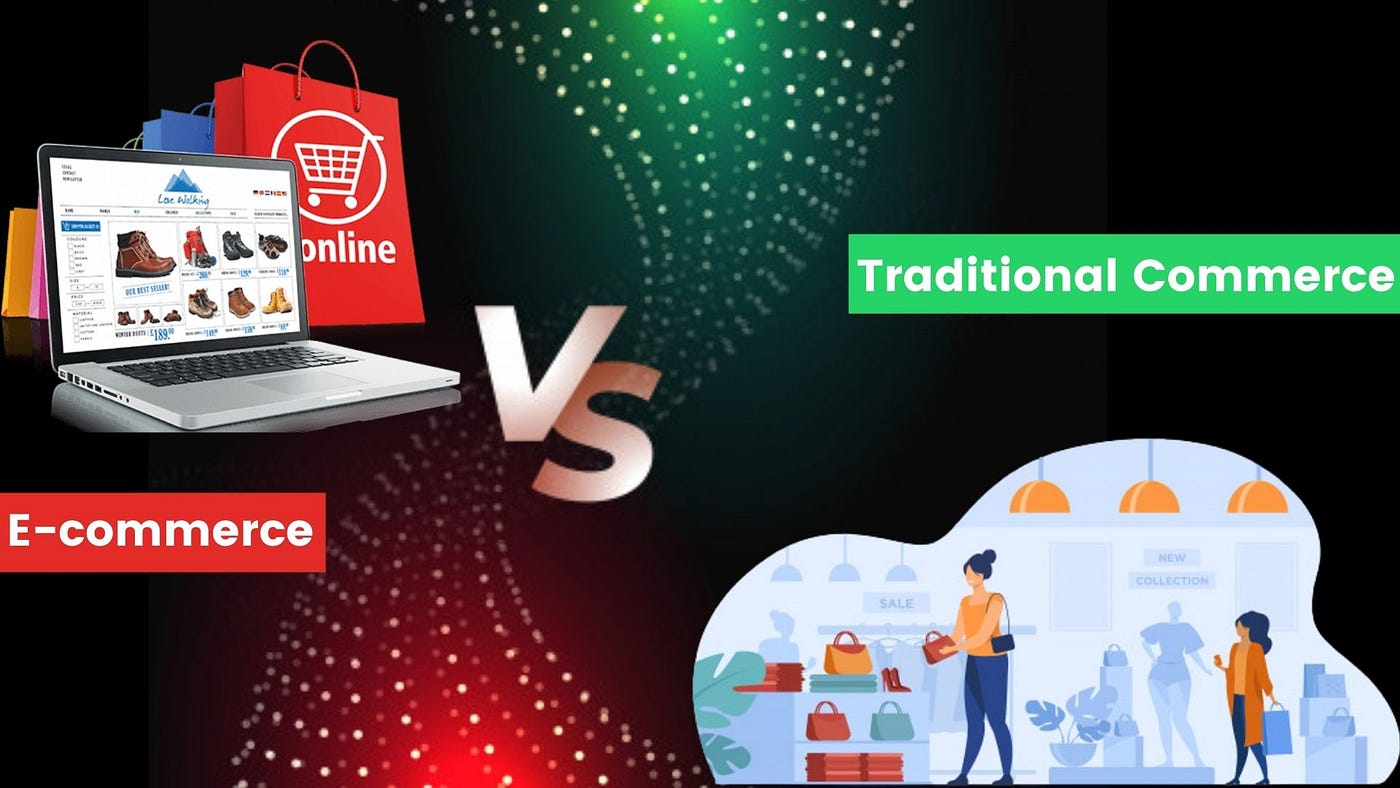
In the modern business landscape, one of the most debated topics is whether e-commerce or traditional business is the better choice. With the rapid growth of online platforms and changing consumer preferences, entrepreneurs often find themselves confused about which path to take.
Both models have their own strengths, limitations, and opportunities. The real question is not just which is better, but which is better for you. This detailed guide will help you understand both business models, compare their features, and decide which one aligns best with your goals.
Understanding E-commerce Business
E-commerce refers to the buying and selling of goods and services through online platforms. It eliminates the need for a physical storefront and allows businesses to operate digitally.
Popular E-commerce Platforms
Some globally recognized platforms include:
- Amazon
- Shopify
- Daraz
These platforms have made it easier for entrepreneurs to launch and manage online stores.
How E-commerce Works
E-commerce businesses typically operate through:
- A website or mobile app
- Online payment gateways
- Digital marketing channels
- Logistics and delivery systems
Customers browse products, place orders, make payments online, and receive products at their doorstep.
Types of E-commerce Models
1. Business-to-Consumer (B2C)
Companies sell directly to consumers (e.g., online retail stores).
2. Business-to-Business (B2B)
Businesses sell products or services to other businesses.
3. Consumer-to-Consumer (C2C)
Individuals sell products to other individuals through marketplaces.
4. Subscription-Based Model
Customers pay recurring fees for services or products.
Understanding Traditional Business
Traditional business, also known as brick-and-mortar business, involves selling products or services through a physical location.
Examples of Traditional Businesses
- Retail stores
- Restaurants
- Supermarkets
- Service-based shops
How Traditional Business Works
Customers visit a physical location, interact with staff, and make purchases in person. Transactions may be cash-based or digital, but the experience is largely physical.
Types of Traditional Businesses
1. Retail Stores
Sell goods directly to customers.
2. Service Providers
Offer services like salons, repair shops, or consulting.
3. Wholesale Businesses
Supply products in bulk to retailers.
Key Differences Between E-commerce and Traditional Business
| Feature | E-commerce | Traditional Business |
|---|---|---|
| Location | Online (global access) | Physical location |
| Startup Cost | Low to moderate | High |
| Customer Reach | Worldwide | Local or regional |
| Operating Hours | 24/7 | Fixed hours |
| Customer Interaction | Virtual | Face-to-face |
| Scalability | High | Limited |
Advantages of E-commerce Business
1. Global Market Access
E-commerce allows businesses to reach customers beyond geographical boundaries.
2. Lower Operational Costs
There is no need to pay for rent, utilities, or large staff.
3. 24/7 Availability
Online stores never close, allowing continuous sales.
4. Easy Marketing and Analytics
Digital marketing tools help track customer behavior and improve strategies.
5. Scalability and Growth
You can easily expand product lines or target new markets without major investments.
Disadvantages of E-commerce Business
1. Lack of Physical Experience
Customers cannot touch or try products before purchasing.
2. High Competition
The online marketplace is crowded with competitors.
3. Technical Issues
Website downtime, hacking, or payment failures can disrupt business.
4. Shipping and Logistics Challenges
Late deliveries and damaged goods can affect customer satisfaction.
Advantages of Traditional Business
1. Personal Interaction
Face-to-face communication builds trust and loyalty.
2. Immediate Product Access
Customers receive products instantly without waiting for delivery.
3. Strong Local Presence
Businesses can establish dominance in a specific area.
4. Better Customer Experience
Physical stores provide a tangible shopping experience.
Disadvantages of Traditional Business
1. High Setup and Maintenance Costs
Expenses include rent, salaries, utilities, and inventory.
2. Limited Reach
Customers must visit the store physically.
3. Fixed Working Hours
Sales are restricted to business hours.
4. Difficult Expansion
Opening new locations requires significant investment.
E-commerce vs Traditional Business: A Detailed Comparison
Cost Comparison
E-commerce is generally more affordable to start, while traditional businesses require significant capital investment.
Customer Experience
Traditional businesses offer a more personalized experience, while e-commerce focuses on convenience.
Growth Potential
E-commerce has faster scalability, while traditional businesses grow steadily but slowly.
Risk Factors
- E-commerce risks: cybersecurity, technical failures
- Traditional risks: high expenses, location dependency
Which Business Model is Better for You?
Choosing the right model depends on several factors:
Choose E-commerce If:
- You want to start with a low budget
- You aim for global reach
- You are comfortable with technology
Choose Traditional Business If:
- Your product requires physical interaction
- You prefer direct customer relationships
- You want to target a local audience
The Hybrid Business Model: The Best of Both Worlds
Many modern businesses combine both models to maximize success. For example, a company may sell products online while also maintaining a physical store.
Benefits of a Hybrid Model
- Increased customer reach
- Improved brand credibility
- Better customer convenience
- Higher revenue opportunities
Future Trends in Business
The future of business is increasingly digital. However, traditional businesses are not disappearing. Instead, they are evolving by integrating technology.
Key Trends to Watch
- Mobile commerce (m-commerce)
- Artificial intelligence in customer service
- Personalized shopping experiences
- Omnichannel retail strategies
Conclusion
E-commerce and traditional business models each offer unique advantages and challenges. E-commerce provides flexibility, global reach, and scalability, while traditional businesses excel in personal interaction and customer trust.
There is no one-size-fits-all answer. The best choice depends on your business goals, budget, and target audience. However, in today’s competitive environment, combining both approaches through a hybrid model often delivers the best results.
FAQs
1. Which is more profitable: e-commerce or traditional business?
E-commerce can be more profitable due to lower costs, but profitability depends on execution and market demand.
2. Can I run both e-commerce and traditional business together?
Yes, many businesses adopt a hybrid model to maximize reach and revenue.
3. Is e-commerce suitable for beginners?
Yes, it is easier to start with limited investment and offers flexible growth opportunities.
4. What are the biggest challenges in e-commerce?
Competition, logistics, and cybersecurity are the main challenges.
5. Will traditional businesses disappear in the future?
No, they will continue to exist but will evolve by integrating digital technologies.